
If your electricity bill has felt noticeably heavier over the past few years, you are not imagining it. The U.S. Energy Information Administration's data shows residential electricity prices rising consistently since 2020 — a trend driven by aging grid infrastructure, higher fuel costs, and transmission inefficiencies that have existed for decades but were partially absorbed before they started hitting bills this hard.
Most of the advice offered in response has been behavioral: turn off lights, upgrade to LED bulbs, set the thermostat a few degrees lower. These approaches have real value, but they address only one side of the equation — how much electricity your household intentionally uses. They do not address what happens to electricity between the power line and your devices.
"A meaningful portion of residential electrical inefficiency comes from sources that behavioral changes cannot reach — voltage instability, reactive power waste, and current spikes that occur in the wiring before you ever flip a switch."
— GridSense Report, May 2025
The Part of Your Electricity Bill Nobody Talks About
Household electrical systems in the United States are designed to receive power at 120V (or 240V for larger appliances). In practice, the voltage delivered to your home fluctuates constantly — sometimes dropping, sometimes spiking — depending on grid load, weather conditions, and your distance from the nearest substation. These fluctuations are normal, but they are not free.
When your appliances receive power at voltages above or below their optimal operating range, two things happen. First, energy is wasted as heat rather than useful work — a phenomenon electrical engineers call resistive loss. Second, inductive loads — motors in air conditioners, refrigerators, washing machines, and HVAC systems — draw power in a way that creates what utilities call "reactive power." This reactive power does not show up as kilowatt-hours on your bill, but it causes the real current in your wiring to be higher than the useful current, which means your meter does pick up some of that overhead.

Modern households have a larger inductive load than any previous generation — from HVAC compressors to EV chargers — making power factor management increasingly relevant.
The U.S. Department of Energy estimates that inductive loads account for the majority of residential electricity consumption in the average American home. Air conditioning alone represents roughly 12% of total residential electricity use nationally — and all air conditioners contain motors that create reactive power overhead. Refrigerators, dishwashers, washing machines, and HVAC blowers add significantly to this figure.
Voltage Optimization: The Principle Behind the Approach
Voltage optimization is not a new concept. Industrial facilities and commercial buildings have used power conditioning equipment for decades to smooth out electrical supply and reduce energy waste. The technology works by conditioning the electrical supply before it reaches equipment, reducing the gap between raw delivered power and useful consumed power.
The core mechanism involves capacitors — components that store and release electrical charge — which counteract the lagging current created by inductive loads. When reactive current is reduced, the apparent power demand decreases even if the real work being done stays the same. The practical effect is more consistent voltage delivery and reduced strain on the wiring and connected equipment.
-
⚡
Voltage stabilization — Smoothing fluctuations in delivered voltage reduces the energy dissipated as heat by resistive elements in your appliances and wiring.
-
🔄
Reactive power compensation — Capacitor-based systems reduce the reactive current drawn by inductive loads, lowering the total current your home's wiring carries.
-
🛡️
Surge buffering — Devices with capacitor banks can absorb brief voltage spikes that would otherwise pass through to sensitive electronics, extending their operating life.
-
📉
Reduced grid draw peaks — More efficient power use in aggregate means fewer demand spikes, which can reduce the rate tiers some utility companies apply during peak periods.
Consumer-Level Devices: What Has Changed
For most of the history of power factor correction technology, the equipment required was industrial in scale — large capacitor banks installed at the service entrance of commercial facilities, requiring professional installation and significant capital cost. This made the technology inaccessible to residential users regardless of potential benefit.
That changed as component miniaturization brought capacitor arrays and power conditioning circuitry into consumer-grade form factors. Plug-in devices that can be placed directly at the outlet level — where they condition the power supply for everything plugged into that circuit — have made the approach accessible to households for the first time.
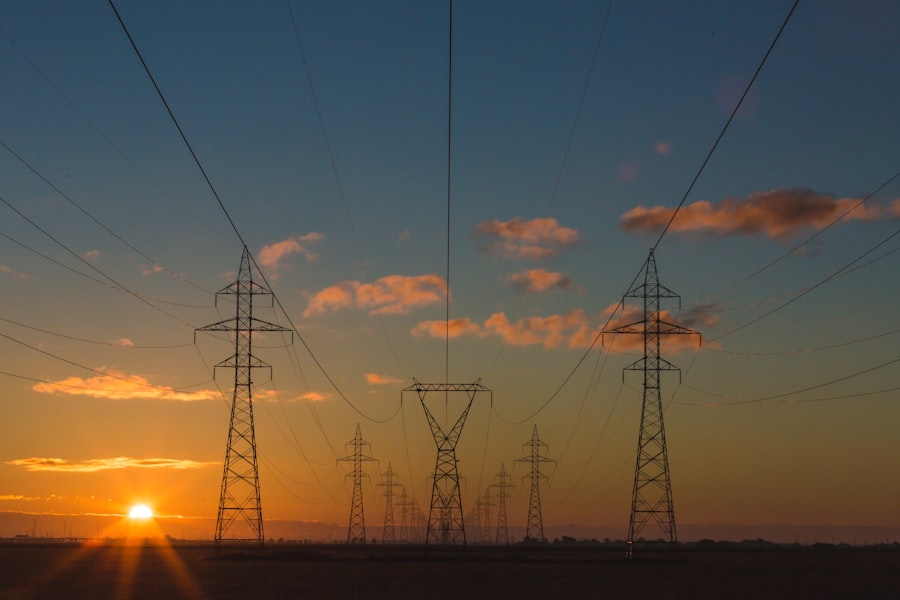
The shift toward smart home energy management reflects a broader recognition that passive consumption is no longer adequate given the direction of residential electricity pricing.
How Households Are Using These Devices
Based on product reviews and usage reports from verified purchasers, households are deploying voltage optimization devices in a few consistent patterns. The most common approach is placement near high-draw inductive loads — air conditioner units, refrigerators, laundry machines — where the reactive power overhead is largest and the benefit most direct.
Multi-device deployments are also common: placing one device per circuit, or one in each major room, to provide conditioning at the point of use rather than relying on a single entry-point device to condition the entire home. The plug-and-play format makes this approach practical without professional involvement.
What the Research Suggests — and What It Does Not
The physics of reactive power compensation and voltage stabilization are well-established in electrical engineering literature. The question for residential applications is whether the benefit, real in industrial settings with known load profiles, translates meaningfully to heterogeneous home environments.
The honest answer is that results vary significantly based on the specific electrical profile of the home — how many inductive loads are present, the quality of the local grid supply, and how the devices are deployed. Homes with predominantly resistive loads (mostly lighting and heating elements) have a smaller theoretical benefit than homes with large inductive loads (HVAC, multiple appliances, EV chargers). This is not a technology that applies equally to every situation, and any guide claiming otherwise would not be credible.
The electricity savings that residential power factor correction can deliver depend on the specific electrical environment of each home. Homes with large, frequently-cycling inductive loads — central air conditioning, heat pumps, large refrigerators, washing machines — represent the primary use case for this technology. Apartments with minimal HVAC and mostly LED lighting may see minimal benefit. Individual results will vary.
The Broader Context: Where Grid Efficiency Is Headed
The trend in U.S. residential electricity pricing shows no sign of reversal. The combination of grid aging, increased demand from electrification (EV charging, heat pump adoption), and climate-driven weather events that stress transmission infrastructure creates persistent upward pressure on rates. The average US residential electricity price reached 16.23 cents per kilowatt-hour in 2024 — up from 12.56 cents in 2020, according to EIA data.
Against this backdrop, the interest in consumer-level power efficiency technology makes practical sense. The question for individual households is not whether energy efficiency matters — it clearly does — but which efficiency measures match their specific situation and budget.
Behavioral changes remain the foundation: they cost nothing and produce guaranteed results. Energy Star appliance upgrades offer measured efficiency gains on a known timeline. Plug-in power optimization devices represent a lower-cost, lower-commitment approach to addressing the part of electrical waste that behavioral changes cannot reach — for households where the load profile makes them relevant.
Frequently Asked Questions
Amazon Associates Disclosure: GridSense Report participates in the Amazon Services LLC Associates Program, an affiliate advertising program designed to provide a means for sites to earn advertising fees by advertising and linking to Amazon.com. As an Amazon Associate we earn from qualifying purchases. AMAZON and AMAZON.COM are trademarks of Amazon.com, Inc. or its affiliates. This site is not affiliated with or endorsed by Amazon.
Affiliate Disclosure (FTC Compliance): This article contains affiliate links per FTC 16 CFR Part 255 guidelines on endorsements and testimonials in advertising. Commission is earned at no additional cost to the reader. Amazon handles all transactions — GridSense Report does not receive or store payment or account information.
Editorial Independence: The product referenced in this article was selected for inclusion based on editorial relevance to the topic. Our affiliate relationship with Amazon does not determine which products we cover or how they are described.
Results Disclaimer: Individual electricity savings results will vary significantly based on home size, electrical load profile, local grid quality, and usage patterns. The technology described has documented effects in electrical engineering literature; results in any specific residential application cannot be guaranteed. This article is for informational purposes only and does not constitute energy or financial advice.
Not Professional Advice: This content is editorial and informational only. It is not professional energy consulting, electrical engineering, or financial advice. Consult a qualified electrician or energy professional for advice specific to your home's electrical system.